The Great Succession: Reincarnation vs. Revolution
.The 15th Dalai Lama: A Search for the “Free World” Successor
As the 14th Dalai Lama approaches his 91st year, the stakes for the Tibetan people have become existential. In July 2025, during his 90th birthday celebrations, His Holiness issued a historic decree: the next Dalai Lama will be born in the “free world
By explicitly ruling out a successor born under Chinese control, the Dalai Lama has effectively preempted Beijing’s plans to install a “puppet” leader. The Chinese government, however, maintains that it holds the “Golden Urn”—a 18th-century vessel used to draw lots for high lamas—and insists that any successor without their approval is illegitimate.
.The Global Impact:This creates a “Two Dalai Lamas” scenario. If Beijing anoints their own child while the Tibetan government-in-exile (the Gaden Phodrang Trust) identifies another in India or the West, the Buddhist world will be split. This isn’t just a religious dispute; it’s a flashpoint for India-China border tensions and a major test for U.S. foreign policy.
. Iran’s New Era: The Rise of Mojtaba Khamenei
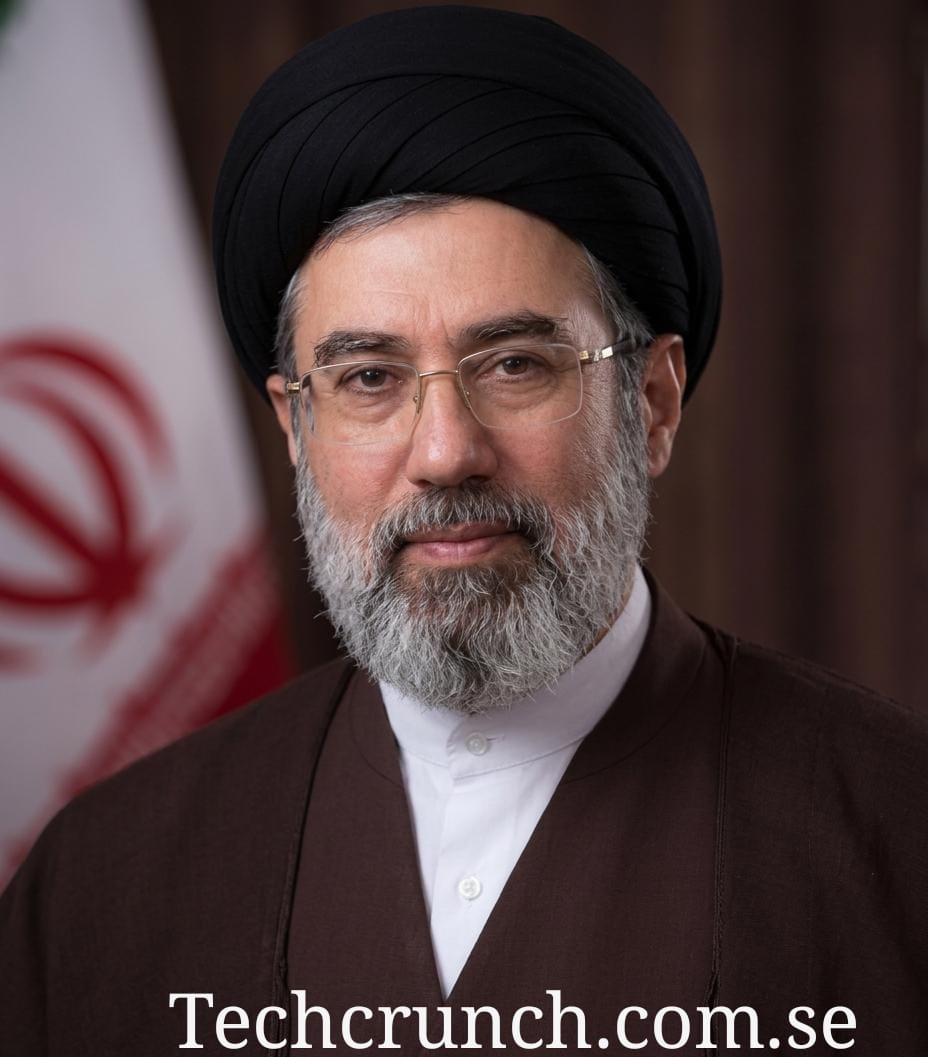
While the Dalai Lama’s succession is a slow, spiritual process, Iran’s transition has been sudden and seismic. In March 2026, the Assembly of Experts officially named Mojtaba Khamenei as the third Supreme Leader of the Islamic Republic.
Unlike his father, Ali Khamenei, Mojtaba’s rise marks the first time since the 1979 Revolution that power has become effectively hereditary. Supported heavily by the Islamic Revolutionary Guard Corps (IRGC), his appointment signals a “hard-line” consolidation of power during a period of intense military conflict with Israel and the West.
How This Affects Global Stability
The synchronization of these two leadership changes creates a “Perfect Storm” for international security:
The Indo-Pacific Friction
The search for the 15th Dalai Lama is expected to take place largely in the Himalayan regions of India (specifically Ladakh or Tawang). China’s refusal to recognize an Indian-born Dalai Lama will likely lead to increased militarization along the Line of Actual Control (LAC). As the U.S. and its allies (Japan, Australia) rally behind the Tibetan right to choose their leader, the “Tibet Issue” is no longer a human rights concern—it is a frontline of the Cold War in Asia.
The Middle East Powderkeg
The appointment of Mojtaba Khamenei has already drawn sharp warnings from Jerusalem. With Israel vowing to target any leader linked to the IRGC’s “Axis of Resistance,” Mojtaba’s leadership begins under the shadow of potential “decapitation strikes.” Furthermore, U.S. President Donald Trump has suggested that any successor lacking Washington’s “approval” will face maximum pressure, potentially leading to a total collapse of the 2015 nuclear framework.
The Crisis of Legitimacy
Both successions suffer from a crisis of legitimacy.
- In Tibet, a state-appointed leader in Beijing will be ignored by the masses, leading to potential civil unrest.
- In Iran, the “hereditary” nature of Mojtaba’s rise has alienated even some traditional clerics in Qom, deepening the divide between the regime and the Iranian public.
Conclusion: Two Paths for the Future
The world is now watching two very different versions of “Supreme Leadership.” One seeks to survive through the quiet discovery of a child in a free nation, while the other seeks to survive through the iron-fisted consolidation of a security state.
Whether the 15th Dalai Lama can maintain the spirit of non-violence in an increasingly aggressive Asia, or whether Mojtaba Khamenei can navigate Iran through a direct war with Israel, will determine the map of global power for the remainder of the 21st century.